

Is it Haram to translate the face of Allah or the Hand of Allah? Some people say it is wrong to translate phrases like that because people could misunderstand.
Quran
Hadith
Islamic Text
بِسْمِ اللَّهِ الرَّحْمَنِ الرَّحِيمِ
In the Name of Allah Most Merciful Most Kind
Short Answer
It is permitted to translate the face of Allah and other Sifaat (attributes). As for the Hand of Allah, this is more controversial. However, upon reflection there is no distinction between translating the hand and other attributes. Therefore, many scholars will translate that too. As for the possibility of misunderstanding, that exists in the original Arabic too.
Explanation
لَيْسَ كَمِثْلِهِ شَيْءٌ وَهُوَ السَّمِيعُ الْبَصِيرُ
There is nothing like Him. And He is the all-hearing and the all-seeing. (Surah al-Shura: 11).
When we speak about Allah Most High, we must always keep in mind His absolute transcendence. As mentioned in the verse above, nothing is similar to Allah The Exalted. That is true irrespective of language. Therefore, the argument that we should not translate the face of Allah or the Hand of Allah does not make much sense. Provided that we keep the transcendence in mind, it is acceptable.
Some people argue that translating Wajh as face and Yadd as hand can cause confusion. The response to this is very simple. The original Arabic words have the same potential. Which is why Arab scholars have a habit of reminding people not to take them literally.
Imam Abu Hanifah
وكل ما ذكره العلماء بِالْفَارِسِيَّةِ من صفات الله تعالى عزت أسماؤه وتعالت صفاته فجائز القول به، سوى اليد بِالْفَارِسِيَّةِ، وجوز أن يقال بروى خدا بلا تشبيه ولا كيفية. (الفقه الأكبر)
All that scholars have mentioned in Persian regarding the attributes of Allah Almighty, whose names are exalted and whose attributes are sublime, is permissible to say, except for the word “hand” in Persian. It is permissible to say: The face of Allah (in Persian), without anthropomorphism or specification. (Imam Abu Hanifah 150H, al-Fiqh al-Akbar).
The commentary
In the Nass (text) above, Imam Abu Hanifah permitted the translation of all terms like the face of Allah or the eyes of Allah (Most High). However, he placed a specific restriction upon the Hand of Allah (Most High). Imam Ali al-Qari raised concern regarding this restriction, in his commentary.
(وكل ما) وفي نسخة: وكل شيء (ذكره العلماء بالفارسية)، أي بغير العبارة العربية (من صفات الله تعالى)، أي المتشابهة كالوجه والقدم والعين. وفي نسخة: من صفات الباري (عزت أسماؤه)، أي غلبت على الأفهام (وتعالت صفاته)، أي ارتفعت عن الأوهام (فجائز القول به)، أي بأن نتبعهم في التعبير عن أسمائه وصفاته حسبما ذكره العلماء باختلاف لغاته (سوى اليد بالفرسية)، أي فإنه لا يجوز تعبيرها بالفارسية كما في نسخة، أي بغير عبارة وردت في الكتاب والسنة، ومفهومه أنه يجوز للعلماء وغيرهم أن يعبروا في صفته ونعته بذكر اليد ونحوها على وفق ما ورد بها كما يقال بيده أزمة التحقيق، والله ولي التوفيق.
ويتفرع على الحصر المذكور بالوجه المسطور قوله: (ويجوز أن يقال بروى خدا) بضم الراء وسكون الواو، أي وجه الله (بلا تشبيه ولا كيفية)، أي مقرونا بنفي التشبيه والكيفية من الهيئة والكمية كما يقتضيه التنزيه؛ وإذا كان القول مقرونا بالتنزيه ونفي التشبيه فالفرق بين اليد والوجه تدقيق يحتاج إلى تحقيق؛ ثم رأيت السلف أجمعوا على عدم تأويل اليد وتبعهم الأشعري في ذلك، بخلاف سائر الصفات، فإن فيها خلافا عنهم بالتأويل والتفويض. (منح الروض الأزهر في شرح الفقه الأكبر)
(And everything) and in another version: everything (that scholars mentioned in Persian), that is, without using the Arabic expression (of the attributes of Allah Almighty), that is, the equivocal ones such as face, foot, and eye. And in another version: of the attributes of the Creator (whose names are exalted), that is, those that are beyond comprehension.(And His attributes are exalted), meaning they are above imaginations (so it is permissible to say about them), meaning that we follow them in expressing His names and attributes according to what the scholars have mentioned in their different languages (except for the hand in Persian), meaning that it is not permissible to express it in Persian as mentioned in one version. That is, other than an expression mentioned in the Book and the Sunnah. Therefore, it is permissible for scholars and others to express his description and attribute by mentioning the hand and the like, according to what was mentioned in it, as it is said, “He has the matters of reality in his hand.” And Allah is the One who grants success.
A result of the aforementioned restriction in written form is his saying: (And it is permissible to say “the face of God”) with the “ra” pronounced with a Dammah and the “waw” with Sukoon, meaning the face of God. (Without likeness or modality), meaning coupled with the negation of likeness and modality of form and quantity as required by transcendence.
If the statement is coupled with affirming transcendence and denying any resemblance to Him, then the distinction between the hand and the face is subtle requiring further investigation. Furthermore, I observed that the early scholars unanimously agreed on not interpreting the attribute of the hand, and al-Ash’ari followed them in this. In contrast to all other attributes. Regarding which there is disagreement among them concerning interpretation and resignation. (Imam Ali al-Qari 1014H, Minah al-Rawd al-Azhar fi Sharh al-Fiqh al-Akbar).
In the Nass above, Imam Ali al-Qari raises a question as to the distinction between the permissibility to translate the face of Allah but not the hand. Then he suggests that it may be due to the Salaf not making Taweel of Yadd (hand). However, this is not upheld. Rather we do have narrations of the Salaf making Taweel of Yadd (hand). So, the question remains.
Practical reality
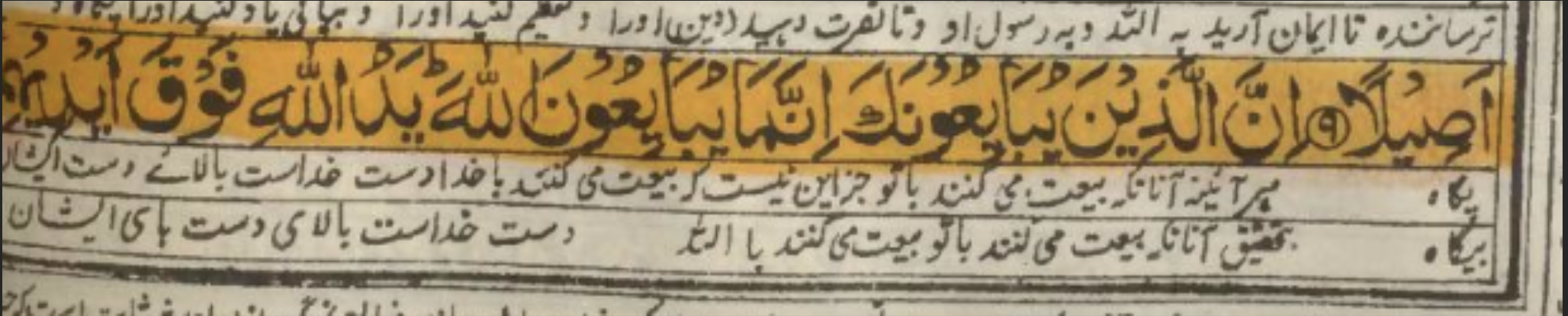
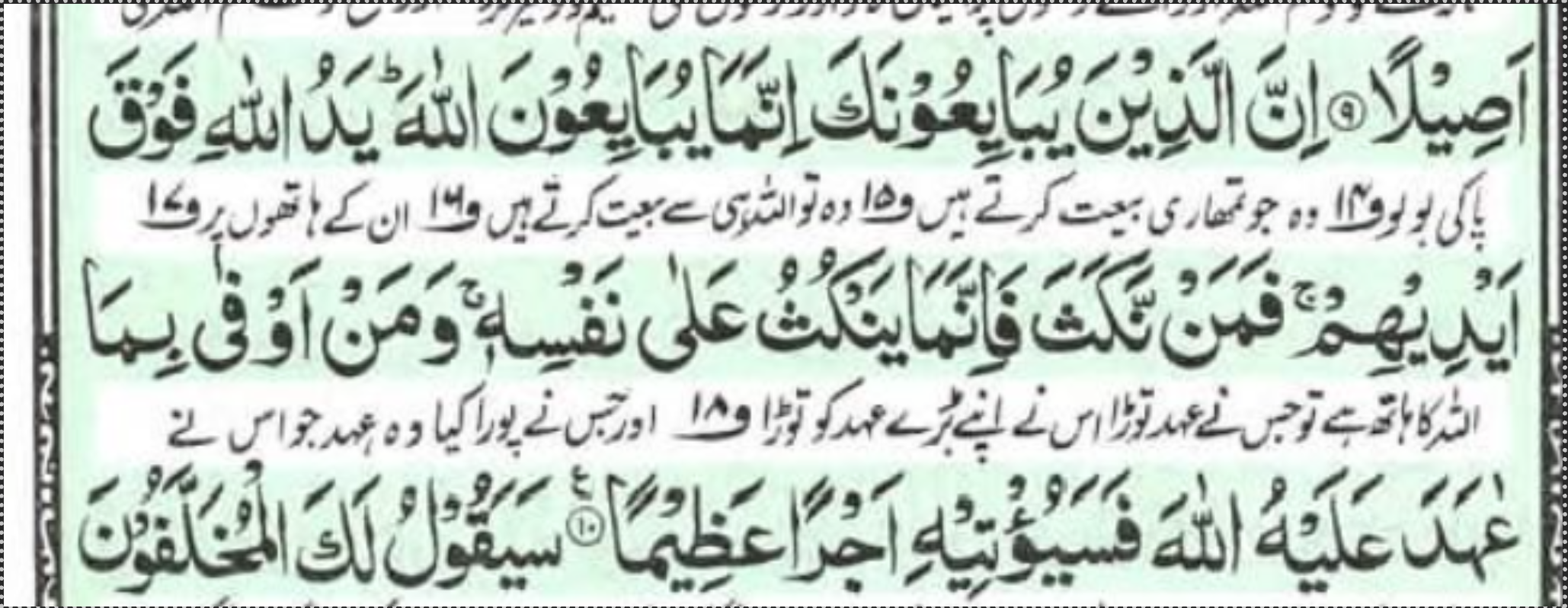
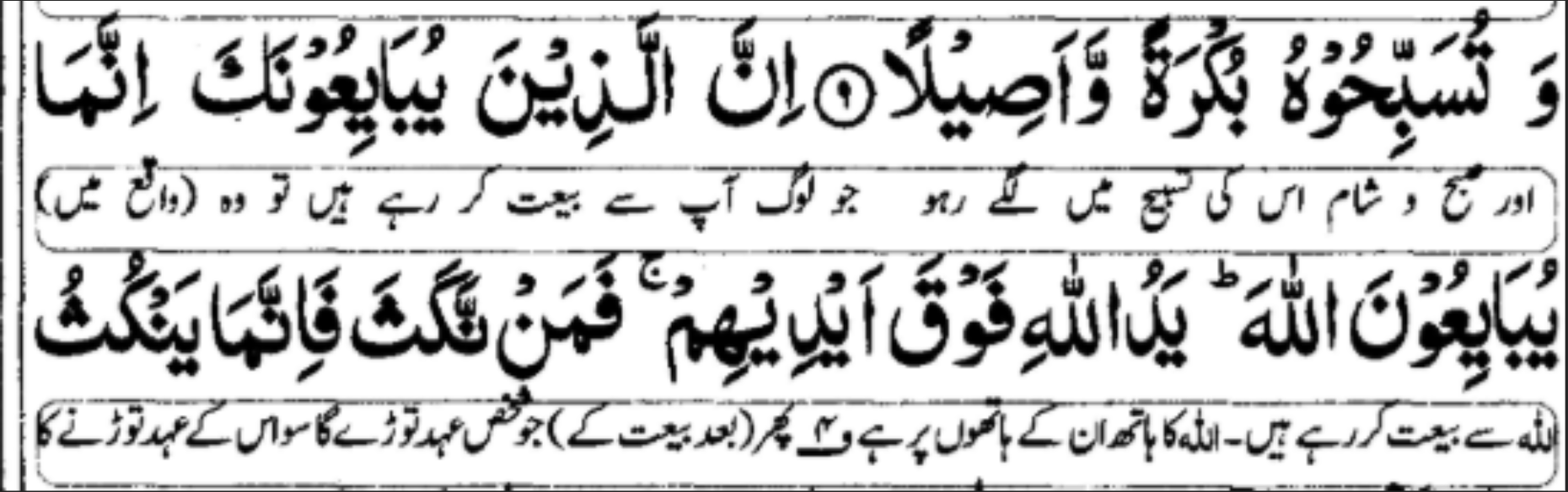
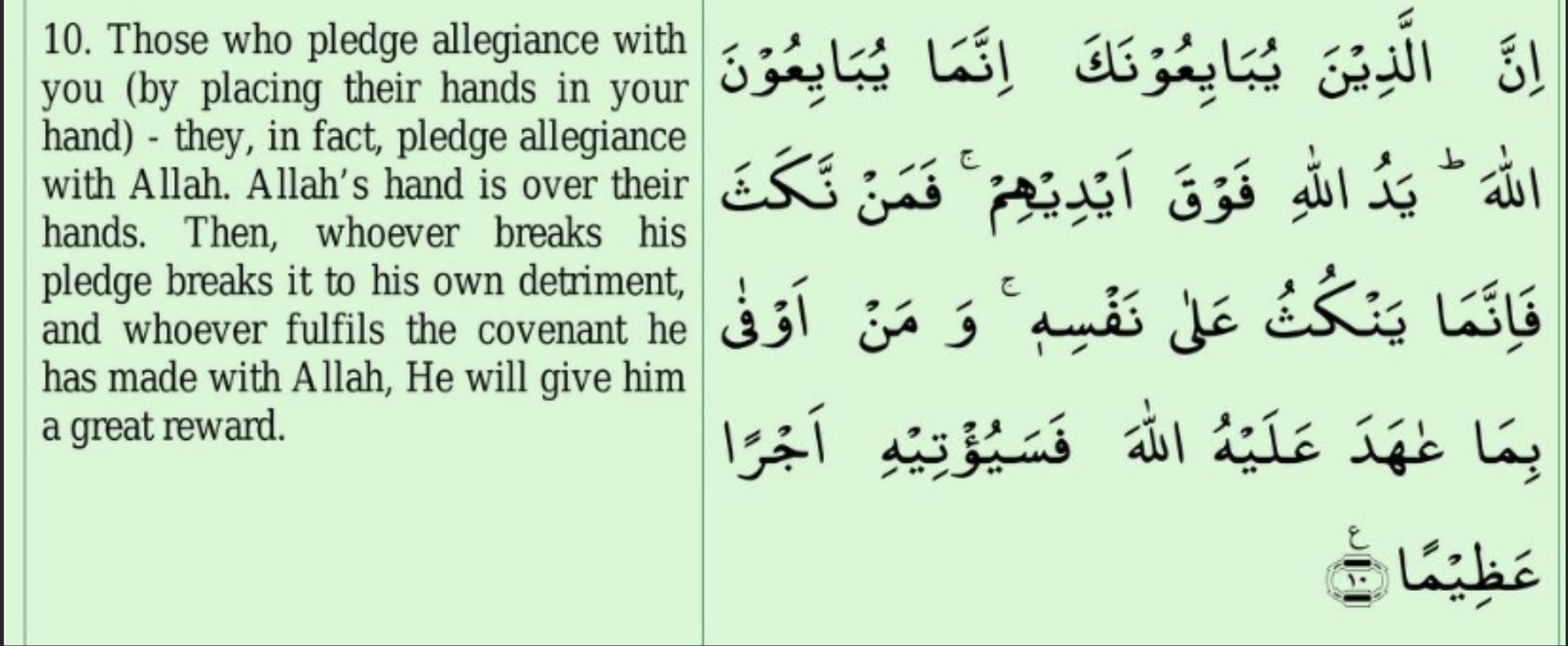
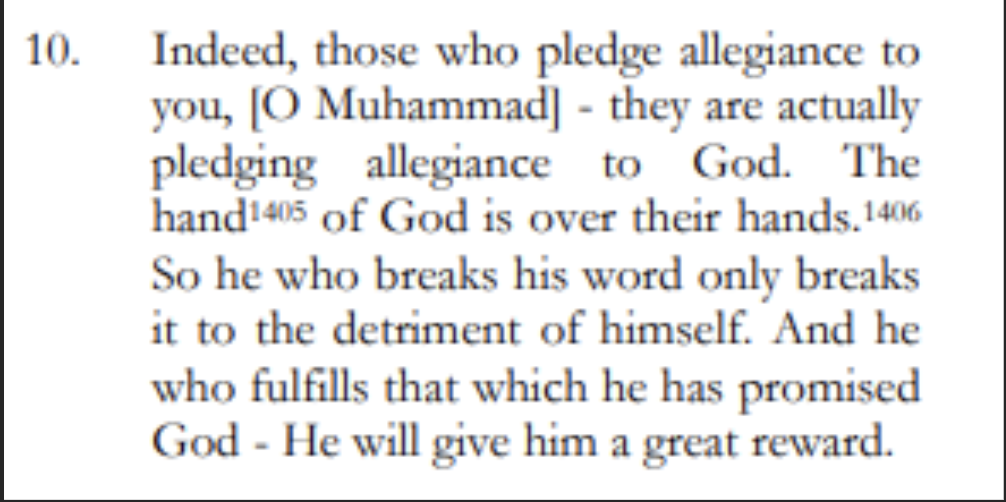
When we look at the practical implementation of Imam Abu Hanifah’s restriction on translating Yadd Allah (Hand of Allah) then it does not seem to be prevalent. One can check early translations of the Holy Quran or contemporary ones. In all cases, that have I seen, Hand has been translated. Some examples or provided below.
Shah Wali Dehlawi (d. 1762) Persian Translation:
Ahmad Riza Khan Barelvi (d. 1921) Urdu Translation:
Ashraf Ali Thanawi (d.1943) Urdu Translation:
Mufti Taqi Usmani
Muhsin Khan
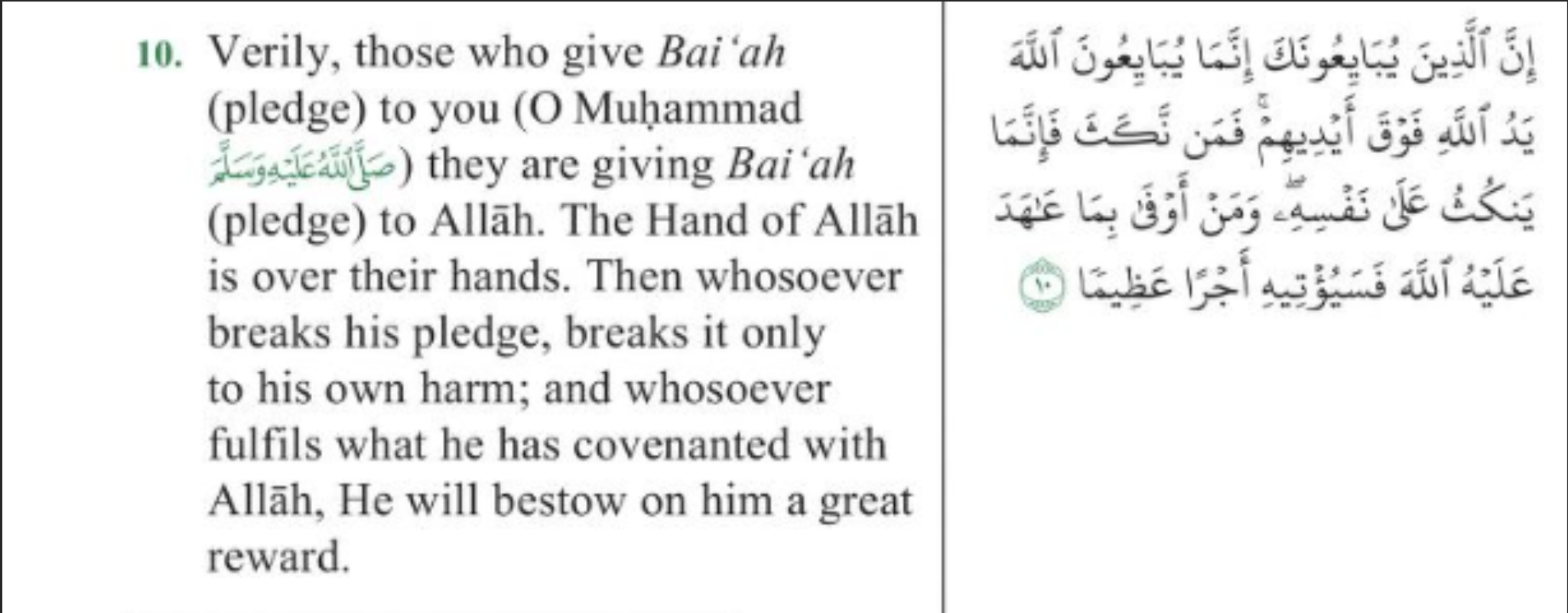
Aisha Bewley

Sahih Internation
Conclusion
People who claim an absolute prohibition upon translating metaphorical descriptions of Allah Most High are demonstrably mistaken. Imam Abu Hanifah is one of the great Imams of Ahl al-Sunnah, yet he clearly permitted one to translate the face of Allah Most High. However, he put a limitation on Yadd (hand) specifically.
Therefore, a cautious approach would be to avoid translating Yadd (hand). However, there are valid grounds to question the distinction between translating face and translating hand.
And Allah Most High Knows Best.
–Answered by Shaykh Noorud-deen Rashid (01.06.26)