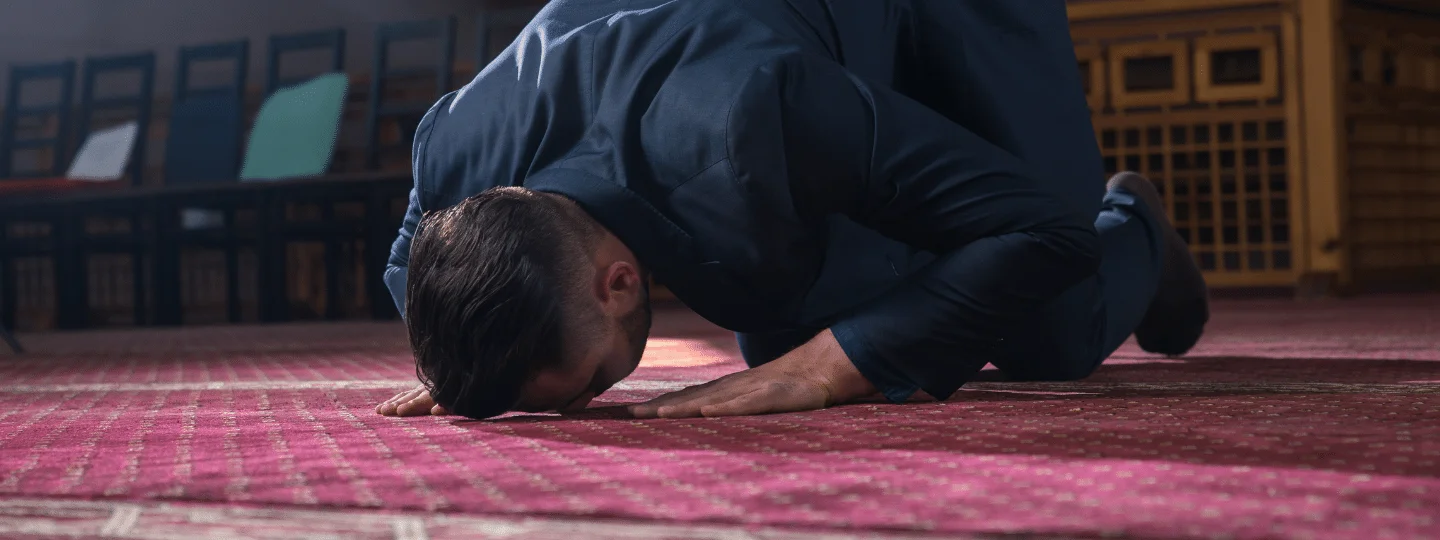


Is it allowed to make Dua in Sajdah according to the Hanafi opinion?
Quran
Hadith
Islamic Text
بِسْمِ اللَّهِ الرَّحْمَنِ الرَّحِيمِ
In the Name of Allah Most Merciful Most Kind
Short Answer
Yes, it is encouraged to make Dua in Sajdah according to the Hanafi Madhab. Since our beloved Prophet ﷺ encouraged it. However, Dua during Salah (Namaz) has to be made in Arabic. It is not acceptable to make Dua during Sajdah in another language.
Explanation
(Sayidina) Abu Hurairah narrated that the Messenger of Allah ﷺ said: The nearest the servant is to his Lord is when he is prostrating. So, make abundant supplication. (Sahih Muslim 482 – 215).
Our blessed Prophet ﷺ encouraged us to make Dua in Sajdah (prostration). The above Hadith is clear proof for this. Unfortunately, some Muslims misunderstand this issue. They think this Hadith permits them to make Dua (supplicate) in a language other than Arabic. This is clearly not the case.
The entire prayer (Salah/Namaz) is prayed in Arabic. From beginning to end. Therefore, any Dua made during the Salah has to be articulated in Arabic. This issue was clarified by major Imams of the Hanafi Madhab.
The Hanafi Madhab
(وَدَعَا) بِالْعَرَبِيَّةِ، وَحَرُمَ بِغَيْرِهَا نَهْرٌ
لَكِنَّ الْمَنْقُولَ عِنْدَنَا الْكَرَاهَةُ؛ فَقَدْ قَالَ فِي غُرَرِ الْأَفْكَارِ شَرْحِ دُرَرِ الْبِحَارِ فِي هَذَا الْمَحَلِّ: وَكُرِهَ الدُّعَاءُ بِالْعَجَمِيَّةِ، لِأَنَّ عُمَرَ نَهَى عَنْ رَطَانَةِ الْأَعَاجِمِ. اهـ. وَالرَّطَانَةُ كَمَا فِي الْقَامُوسِ: الْكَلَامُ بِالْأَعْجَمِيَّةِ.
وَرَأَيْت فِي الْوَلْوَالِجيَّةِ فِي بَحْثِ التَّكْبِيرِ بِالْفَارِسِيَّةِ أَنَّ التَّكْبِيرَ عِبَادَةٌ لِلَّهِ تَعَالَى، وَاَللَّهُ تَعَالَى لَا يُحِبُّ غَيْرَ الْعَرَبِيَّةِ، وَلِهَذَا كَانَ الدُّعَاءُ بِالْعَرَبِيَّةِ أَقْرَبَ إلَى الْإِجَابَةِ، فَلَا يَقَعُ غَيْرُهَا مِنْ الْأَلْسُنِ فِي الرِّضَا وَالْمَحَبَّةِ لَهَا مَوْقِعَ كَلَامِ الْعَرَبِ. اهـ. وَظَاهِرُ التَّعْلِيلِ أَنَّ الدُّعَاءَ بِغَيْرِ الْعَرَبِيَّةِ خِلَافُ الْأَوْلَى، وَأَنَّ الْكَرَاهَةَ فِيهِ تَنْزِيهِيَّةٌ. (رد المحتار على الدر المختار)
Imam al-Haskafi: (And he supplicates) in Arabic. It is prohibited in other languages (al-Nahr).
Imam Ibn Abideen: However, what is reported among us is that it is disliked (Makruh). Indeed he said in Ghurar al-Afkar, the commentary on Durar al-Bihar, in this place: It is disliked to supplicate in non-Arabic. Since Umar forbade the speech (Rataanah) of non-Arabs. End quote. And Rataanah is speaking in non-Arabic according to the dictionary.
I saw in al-Walwaalijiyah, in the discussion of Takbir in Persian, that Takbir is an act of worship to Allah Almighty, and Allah Almighty does not like other than Arabic. Therefore, supplication in Arabic is closer to being answered. No other language gains acceptance and love the way Arabic does. End quote. The apparent of this reasoning is that supplication in a language other than Arabic is contrary to what is preferable (Khilaaf al-Awla). Thus, the dislike in it is slight (Makruh Tanzeehi). (Radd al-Muhtar ala al-Durr al-Mukhtar).
The Hanafi Nusoos (texts) above make it clear that Dua in Salah is restricted to the Arabic language. However, there is some despute or difference regarding the ruling. Imam al-Haskafi said it is Haram to make Dua in other than Arabic during Salah or Sajdah. However, Imam Ibn Abideen considered it Makruh.
Makruh Tahreemi or Tanzeehi
In the Hanafi Madhab we have two forms of Makruh. Tahreemi, which is sinful. And Tanzeehi, which is not sinful. One of the difficulties related to studying Hanafi Fiqh is in identifying which Makruh is to be applied to a particular ruling. This often requires significant research. And even after thorough research one sometimes finds a difference of opinion.
Imam Ibn Abideen further clarified his view regarding the issue of making Dua in Namaz in a language other than Arabic. After mentioning the fact that it is Makruh, he discussed whether it is Tahreemi or Tanzeehi. In the following Nass, he seems to reconcile by saying it is Tahreemi in Salah and Tanzeehi outside of it.
وَلَا يَبْعُدُ أَنْ يَكُونَ الدُّعَاءُ بِالْفَارِسِيَّةِ مَكْرُوهًا تَحْرِيمًا فِي الصَّلَاةِ وَتَنْزِيهًا خَارِجَهَا، فَلْيُتَأَمَّلْ وَلْيُرَاجَعْ
It is not unlikely that supplication in Persian is considered prohibitively disliked (Makruh Tahreeman) during prayer and merely disliked (Tanzeehi) outside of it. This must be considered and reviewed. (Imam Muhammad Amin bin Umar Ibn Abideen 1252H, Radd al-Muhtar).
Conclusion
Outside of Salah one can make Dua in any language. However, Salah has restrictions. One of these restrictions is reciting everything in Arabic. Therefore, a person making Dua in Sajdah must do so in Arabic.
And Allah Most High Knows Best.
–Answered by Shaykh Noorud-deen Rashid (01.12.25)